

Mini Cooper B38 Engine Diagnostics
Cylinder Endoscopy, Cooling System Pressure Test, and Full Computer Scan
When a Mini Cooper starts showing warning signs, the smartest move is not to throw parts at it. The BMW B38 engine is a modern, turbocharged platform that relies on precise fuel delivery, ignition, cooling control, and sensor feedback. If something is off, a surface-level check can miss the real cause.
This Mini Cooper came into our workshop for a full diagnostic assessment: a cylinder endoscopy, a cooling system pressure test, and a complete professional computer scan. In other words, no guessing, no shortcuts - just a proper deep dive to uncover what was really going on.
Why the BMW B38 Needs a Proper Diagnostic Approach
The B38 is a 1.5L turbocharged three-cylinder engine used across Mini and BMW models. It is efficient, responsive, and engineered tightly. That also means when an issue appears, symptoms can overlap. A misfire might be spark related, but it could also be injector behaviour, compression loss, vacuum leaks, cooling system issues, or software adaptation problems.
A thorough diagnostic process allows us to separate symptoms from causes and plan the correct repair, first time.
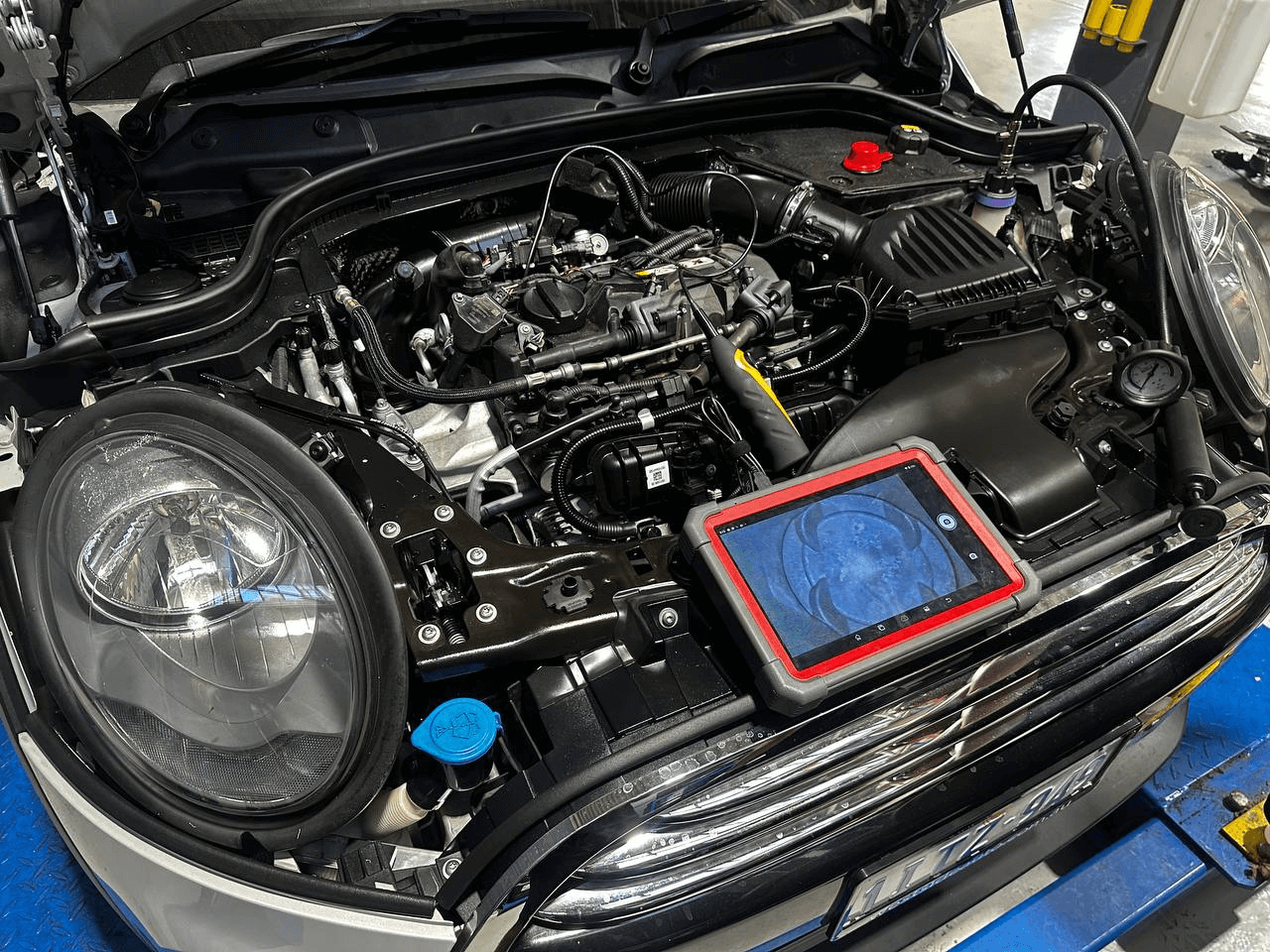
Step 1: Professional Computer Scan
Reading Fault Codes, Live Data, and System Health
A proper diagnostic scan is far more than pulling a code and clearing it. We performed a complete scan of the vehicle’s control modules, then analysed the results properly.
This process typically includes:
Reading fault codes across relevant systems (engine, transmission, body modules, etc.)
Checking freeze-frame data (what conditions were present when the fault occurred)
Reviewing live sensor data (temperatures, pressures, fuel trims, oxygen sensor behaviour)
Checking misfire counters and cylinder balance
Reviewing boost control behaviour and intake system readings
Evaluating adaptation values that can point to underlying issues
This gives a high-level picture of how the engine is behaving and which systems are reporting problems, but it is only part of the story. Codes often tell you where the symptom was detected, not what caused it.
Step 2: Cylinder Endoscopy
Looking Inside the Engine Without Pulling It Apart
A cylinder endoscopy lets us visually inspect inside the cylinders through the spark plug holes. This is one of the most valuable diagnostic tools on modern engines because it can reveal issues that a scan tool cannot.
With endoscopy, we can check for:
Signs of coolant entry into a cylinder (cleaned piston tops, unusual deposits)
Oil burning indicators (wet oil residue, heavy carbon)
Damage to piston crowns or cylinder walls
Evidence of detonation or overheating
Abnormal combustion patterns that point to injector or ignition issues
It is a practical, low-intrusion way to confirm or rule out mechanical problems without jumping straight to disassembly.
Step 3: Cooling System Pressure Test
Finding Coolant Leaks That Do Not Show Up on the Floor
Cooling system issues can hide in plain sight. A vehicle might be losing coolant slowly, overheating intermittently, or triggering temperature-related faults, without leaving an obvious puddle.
A pressure test allows us to pressurise the cooling system and see if it holds pressure over time. If it does not, we inspect the system to locate the leak point. This can highlight:
External leaks (hoses, radiator, expansion tank, water pump, fittings)
Slow seepage that only occurs when hot or under pressure
Internal leaks that may indicate head gasket or cylinder sealing concerns
On the BMW B38 engine, cooling system health is critical. Any loss of pressure, abnormal temperature behaviour, or unexplained coolant loss needs to be taken seriously and diagnosed properly.
Why This Level of Diagnosis Saves Money
It might sound counterintuitive, but comprehensive diagnostics are often the cheapest path forward because they prevent unnecessary parts replacement.
Too often, cars arrive after someone has already replaced a list of parts based on assumptions. The car still has the same fault, and now the real diagnosis starts, with more time and money already spent.
A deep diagnostic approach helps ensure:
The correct repair is identified early
Repair recommendations are evidence-based
Avoidable parts replacement is reduced
The problem is fixed properly, not temporarily masked
The Outcome: Clear Answers, Not Assumptions
For this Mini Cooper, the goal was straightforward: identify the real story behind the engine. With a full computer scan, internal cylinder inspection, and cooling system integrity testing, we can confidently narrow the cause, recommend the correct repair path, and avoid guesswork.
If your Mini Cooper is showing warning lights, misfires, coolant loss, overheating, or unusual performance issues, a full diagnostic is the right first step.
Book Mini Cooper Diagnostics
If your Mini needs answers, we can help.
Call (08) 6280 2087 to speak with our team, or book your Mini Cooper service online.
